How to Cost a Dish per Portion from Its Recipe, Including Yield Loss
Dish costs often miss for one reason: ingredients are costed by raw weight while what is served is cooked weight. Here is how to do it properly, with a chicken fried rice example.
Food cost, or cost of goods for a dish, is the total cost of ingredients used to make one portion. It is the basis for pricing and for reading profit. The method is similar to costing a drink, but food has one extra trap: yield loss during cooking.
The basic formula
For each ingredient, divide the pack price by its size to get a price per gram or millilitre, then multiply by the amount in the recipe. Add up every ingredient, add packaging if it is boxed, and that is the cost per portion.
Do not forget yield loss
A kilo of raw chicken does not become a kilo of shredded chicken. After bones, skin, and water are lost in cooking, maybe 700 grams remain. If the recipe calls for 50 grams of shredded chicken, its cost must come from the cooked weight, not the raw one.
Shredded chicken cost per cooked gram
- Chicken, Rp45,000 per raw kilo
- Rp45.000
- Cooked yield from 1 kilo
- 700 g
- Price per cooked gram (45,000 divided by 700)
- Rp64,3
- 50 grams used per portion
- Rp3.214
Costed from raw weight, 50 grams of chicken is only Rp2,250. A gap of nearly Rp1,000 per portion looks small, but across 1,000 portions a month it is close to Rp1,000,000 that never made it into the numbers.
Full example: chicken fried rice
Cost of one portion of chicken fried rice
- Rice, Rp14,000 per kilo, 100 grams
- Rp1.400
- Egg, Rp30,000 per kilo of 16 eggs, 1 egg
- Rp1.875
- Spice paste, Rp40,000 per kilo, 30 grams
- Rp1.200
- Sweet soy sauce, Rp24,000 per 600 ml, 15 ml
- Rp600
- Cooking oil, Rp18,000 per litre, 15 ml
- Rp270
- Shredded chicken, 50 cooked grams
- Rp3.214
- Crackers and pickles
- Rp500
- Total cost per portion
- Rp9.059
Sold at Rp25,000, the food cost is 36 percent and the gross profit Rp15,941. That is slightly above the 35 percent mark food businesses commonly use. The options: raise the price a little, trim the chicken portion, or find a cheaper chicken supplier.
What usually gets missed
- Yield loss on meat, chicken, fish, and trimmed vegetables.
- Frying oil that is reused but eventually thrown away.
- Packaging for takeaway and delivery orders.
- Ingredient prices that have risen since the last calculation.
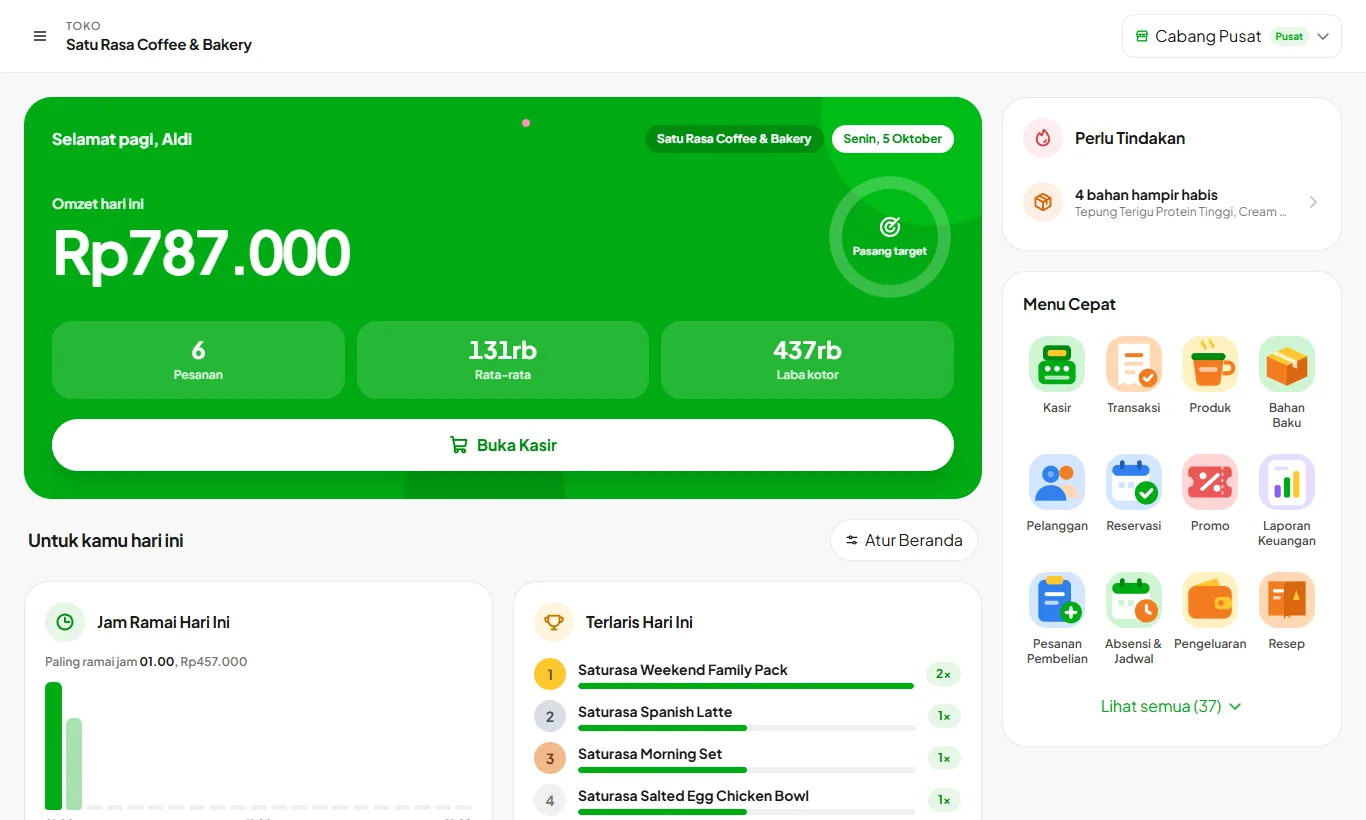
In Kelola, each menu item has a recipe of ingredients and amounts. For ingredients that shrink, enter the raw weight needed per portion, such as 71 grams of raw chicken for 50 grams shredded, so both cost and stock come out right. The cost per portion calculates itself and updates when purchase prices change, and ingredient stock is deducted each time the item sells.